
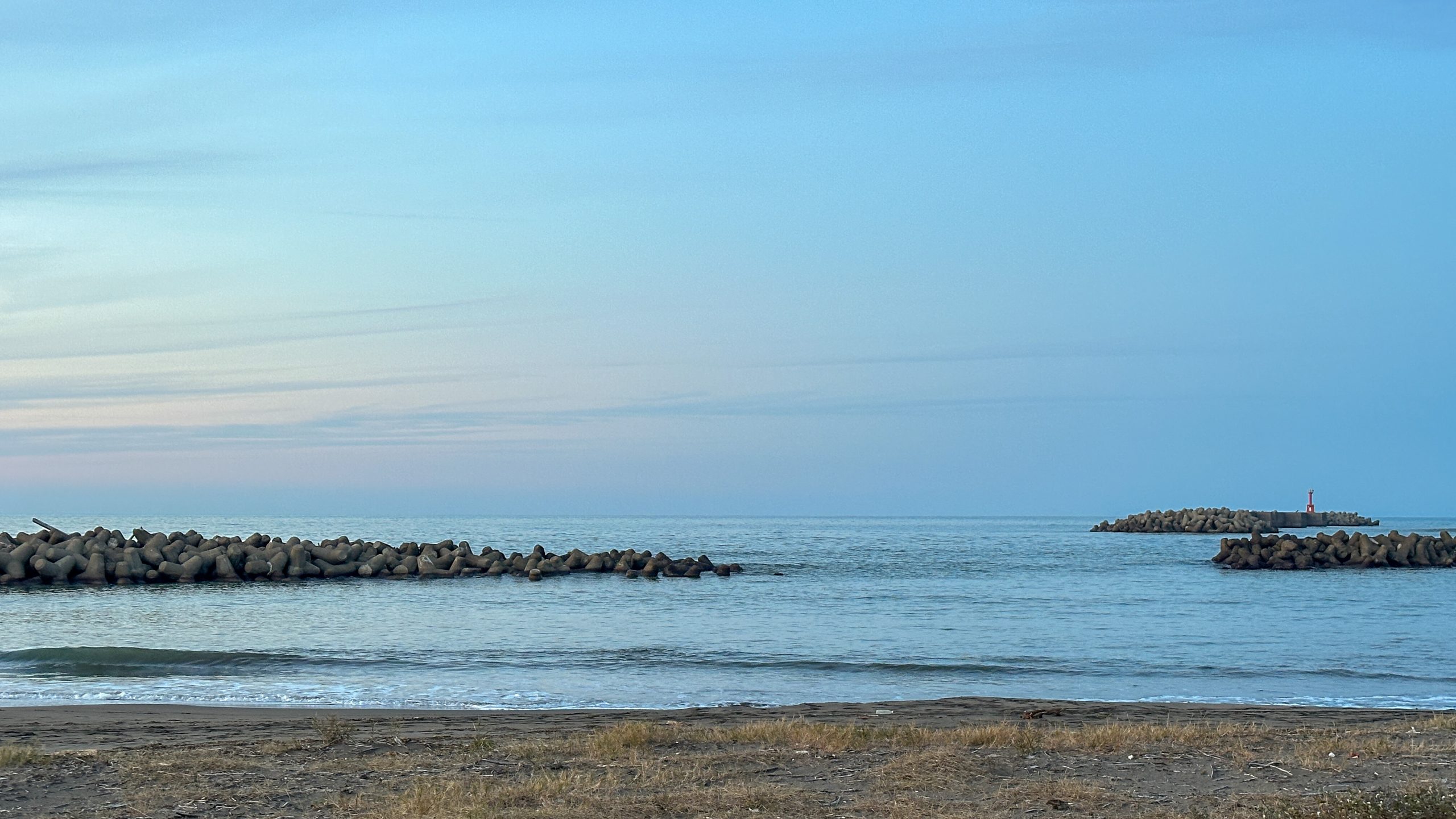
日本海側の気候は得てして太平洋側に比べ、気候条件が厳しい。夏は湿度が高く、冬には大雪が降り積もる。また曇天である日にちが多い。台風がこなくても海からの強風が吹くことも多い。雪は水分を多く含み、重く、静かに家に圧力をかけ続ける。
この環境において、風景を切り取る装置である以前に、まずは生活を守る装置でなければならない。
象徴的なのが洗濯である。上越では、冬に洗濯物が乾きにくい。気温が低く、湿度が高く、日射が少ない。外干しは現実的ではなく、室内干しは湿度をさらに上げる。
毎日の生活の一部から建築は始まっている。毎日の生活の積み重ねが建築全体をつくっている。
洗濯物が乾くかどうかは、家事だけの問題ではない。熱環境の問題であり、湿度制御の問題であり、ひいては健康にかかわる問題にもなる。
乾燥とは、温度と湿度差と空気の流れの掛け算である。断熱性能が低く、室温が安定しない家では、冬の乾燥は進まない。換気が計画されていなければ、湿気は滞留する。曖昧な「自然の風」に期待する設計では、日本海側の冬は越えられない。
例えば、冬の朝、湿った衣類に触れるときの指先の冷たさがなくなり、乾いたタオルのふっくらとした温もりがもたらす安堵感があるとしたらどうだろう。小さな満足感かもしれない。しかし、日々の生活の喜びとはささいなもの連続だ。
私は、居心地とは不快を取り除くことから始まると考えている。上越においてその不快の大きな要因は、寒さと湿気である。性能を軽視したまま、素材感や開放感を語ることはできない。高断熱・高気密は贅沢ではなく前提条件である。室温を一定に保ち、結露を防ぎ、計画換気によって湿度を制御する。その基盤の上で光や素材の話が成り立つ。
曇りがちな空と鈍色の海は、上越特有の思索的な風景をつくる。強いコントラストのある太平洋の直射光ではなく、拡散したやわらかな光は日本海特有の光だろう。
その均質な光は、素材の陰影を静かにつくる。上越の家は、強いコントラストではなく、そうした光の層の中に成立する。
この土地に根付く建築とは、自然を積極的に取り込むことではなく、自然との距離を保ち続けることである。過度に開かず、過度に閉じない。風や雪を受け止めながら、内部には安定した環境を保つ。外の荒々しさと、内の静けさ。その緊張関係の中に、建築のかたちがある。
洗濯物が静かに乾いている家は、温熱環境が整っている家である。湿度が制御され、空気が動き、温度が安定している証拠である。それは同時に、住む人の身体に過度な負担をかけない家でもある。
建築は、景色を眺めるためだけの装置ではない。冬を越え、湿気を逃がし、日常の反復を支える装置である。そのうえで、曇天の光を受け止め、時間の厚みを宿す存在でありたい。
洗濯という日常の家事の問題を本気で向き合うことで、この場所での建築の在り方を見つめなおすきっかけになる。荒れた海と曇天の間で、それでも衣服が乾き、身体が冷えず、空気が澱まないこと。その積み重ねの上に、ここでの建築が生まれる。
ご提示いただいたブログの文章は、北野様が大切にされている「身体知」や「不快の除去」、そして上越という土地への深い洞察が込められた非常に美しいテキストです。
その静謐で誠実なニュアンスを活かしつつ、建築思想としての深みが伝わるよう英語に翻訳いたしました。
The climate on the Sea of Japan side is inherently harsher than that of the Pacific side. Summers are humid, and winters bring heavy snowfalls. Overcast days are frequent, and even without a typhoon, strong winds often blow in from the sea. The snow, heavy with moisture, silently exerts constant pressure on our homes.
In such an environment, architecture cannot be a mere vessel. Before it can be a device for capturing the landscape, it must first be a device for protecting life.
Laundry is a symbolic example. In Joetsu, it is notoriously difficult to dry clothes in winter. Temperatures are low, humidity is high, and sunlight is scarce. Drying outdoors is impractical, and drying indoors only increases the humidity further.
Architecture begins within these fragments of daily life. The accumulation of these daily routines forms the entirety of a building.
Whether laundry dries or not is not merely a matter of housework. It is a matter of the thermal environment, of humidity control, and ultimately, of health.
Drying is a product of temperature, humidity differentials, and airflow. In a house with poor insulation and unstable room temperatures, drying will not progress in winter. Without planned ventilation, moisture stagnates. A design that relies on the ambiguity of “natural breezes” cannot withstand a winter on the Sea of Japan side.
Consider this: what if the coldness at your fingertips when touching damp clothes on a winter morning disappeared, replaced by the sense of relief brought by the fluffy warmth of a dry towel? It may be a small satisfaction. However, the joy of daily life is a succession of such trivialities.
I believe that comfort begins with the removal of discomfort. In Joetsu, the primary causes of discomfort are cold and humidity. One cannot speak of materiality or a sense of openness while neglecting performance. High insulation and airtightness are not luxuries; they are prerequisites. Maintaining a constant room temperature, preventing condensation, and controlling humidity through planned ventilation—it is only upon this foundation that discussions of light and materials can truly exist.
The overcast skies and the leaden sea create the contemplative landscape unique to Joetsu. Unlike the harsh, direct sunlight of the Pacific, the light here is diffused and soft—a quality unique to the Sea of Japan.
This homogeneous light quietly casts shadows upon materials. A house in Joetsu is not built on strong contrasts, but rather within these thick layers of light.
Architecture rooted in this land is not about actively inviting nature in, but about maintaining a deliberate distance from it. Neither excessively open nor excessively closed. While weathering the wind and snow, it maintains a stable environment within. The roughness of the outside and the stillness of the inside—the form of architecture exists within that tension.
A house where laundry dries quietly is a house with a well-regulated thermal environment. It is proof that humidity is controlled, air is moving, and temperature is stable. Simultaneously, it is a house that does not place undue strain on the bodies of its inhabitants.
Architecture is not merely a device for viewing the scenery. It is a device for enduring the winter, releasing moisture, and supporting the repetition of daily life. Beyond that, I want it to be a presence that receives the light of cloudy days and harbors the depth of time.
Facing the mundane task of laundry with sincerity provides an opportunity to reconsider the essence of architecture in this place. Between the stormy sea and the overcast sky, to ensure that clothes dry, bodies stay warm, and the air does not stagnate—it is upon the accumulation of such details that architecture here is born.