
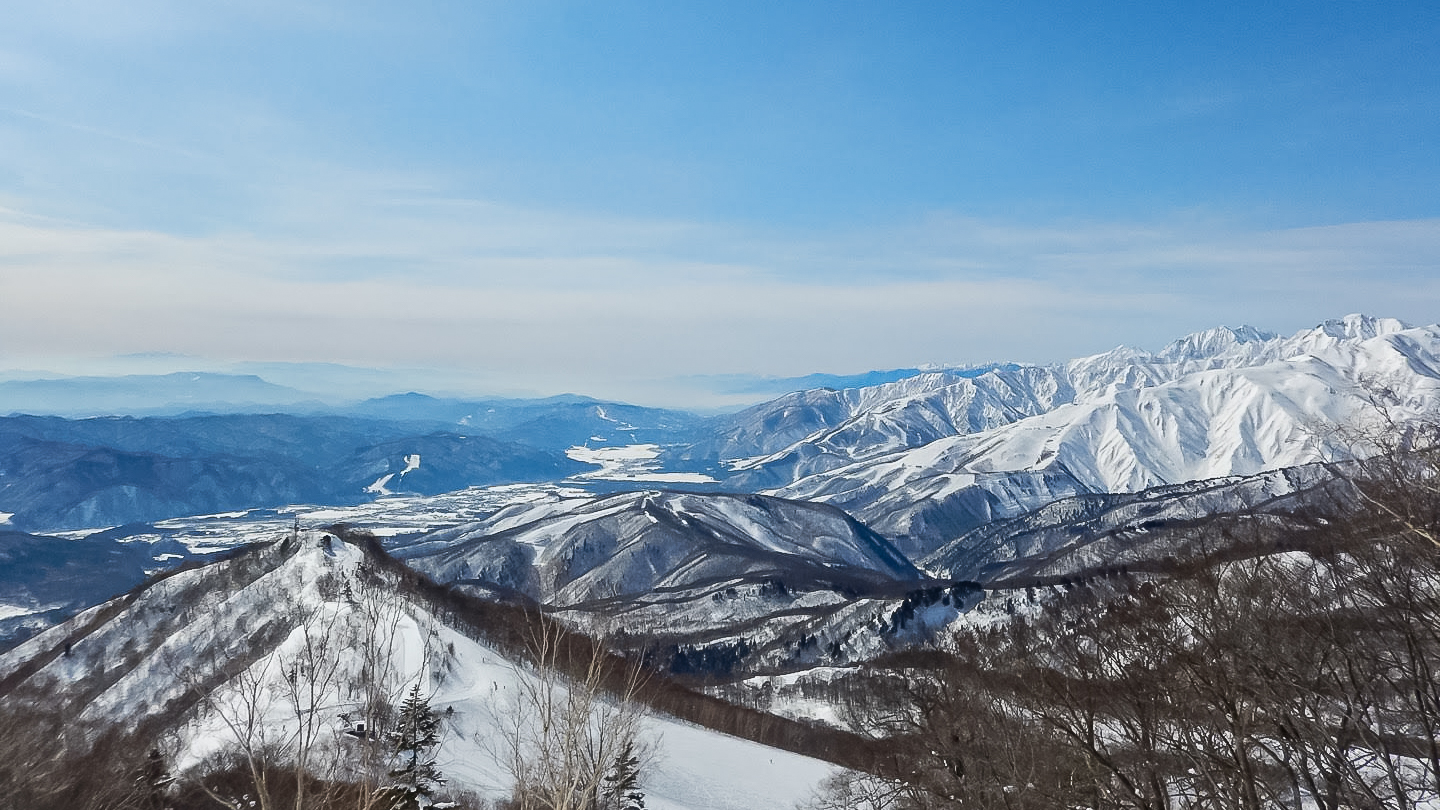
土地の風景は、記憶の背景をつくる。
通勤途中の街並み、遠くに見える山並み、家のバルコニーにかかる洗濯物、何本もつらなる電信柱。当たり前にそこに存在する。昨日もあったし、今日もある。明日もあることだろう。だから意識されない。風景は、日常の反復の中でゆっくりと透明になっていく。
しかし透明になった風景は、消えたわけではない。無意識のなかで記憶の奥底で静かに流れ続けている。風景の体験は、視覚だけにとどまらない。湿度、匂い、風の肌触り、温度。五感のすべてがある。だからその記憶の呼び起こし方も、言葉よりずっと深いところに届く。雨上がりの土の匂いに、子どもの頃の帰り道が重なる。あれは風景の記憶だ。視覚ではなく、身体ごと刻まれた記憶。自分自身も風景に埋もれている。そのことを、私たちはふだん忘れている。
そのことに気づくのは、まったく違う風景に出会ったときだ。
私は生まれ育った土地を離れ、長野へ移住したとき、山との距離の近さに戸惑った。空の近さ、緑の密度、淡い冬の光。それまで経験したことのない風景の質感だった。と同時に、それまでの土地の風景がいかに平坦であったかを、対比によって初めて知らされた。失ってから気づく、という言い方があるが、風景の場合はもう少し正確だ。対比の中で、かつての日常の感触が、ゆっくりと浮かび上がってくる。意識したことすらなかったはずの風景が、異なる風景との出会いによって、初めて「体験」となる。
旅もそうだ。見知らぬ土地の風景に身を置くとき、私たちは無意識のうちに、自分が慣れ親しんできた風景と照らし合わせている。その差異の中に、自分がどういう風景の中で育ったかが、浮かび上がる。風景を眺めることは、同時に自分自身を眺めることに近い。遠くへ行けば行くほど、自分が生まれ育った場所がくっきりとする。
土地にはそれぞれの固有性がある。気候、地形、そこに積み重なってきた時間。そうした固有性は、そこに暮らす人々の建築にも、生活の様式にも、気質にも、少しずつ染み出している。厳しい冬を越すために閉じた構成をとる地域の住まいは、住まい手の内省的な思考を静かに支える背景となる。外に対して開かれた風土は、自然や他者との境界を曖昧にする、おおらかな感覚を育むかもしれない。風景は、単なる景色ではなく、そこに生きる人間を長い時間をかけてかたちづくる、見えない力を持っている。
設計することは、誰かの風景をつくることだ。
朝、キッチンに立ったときに見える道を歩く人。子どもが廊下を走るとき、視界をよぎる空の色。夕方、縁側から差し込む西日の角度。冬の朝、結露した窓ガラス越しに見える隣家の屋根。住まい手が意識して鑑賞するものではない。むしろ意識されないからこそ、風景は深く沈殿する。20年、30年とそこで暮らす中で、切り取られた風景は、記憶の地層を静かに積み重ねていく。
やがて子どもが成長し、家を離れたとき。ふとした瞬間に思い出すのは、豪華な設備でも広いリビングでもなく、窓から差し込んでいた光の角度や、季節ごとに表情を変えた庭の木陰だろう。言葉にならない懐かしさの正体は、たいていそういう「風景の断片」だ。それは写真には写らない。設計図にも描けない。しかし確かに、その家でしか生まれなかった記憶として、誰かの内側に残り続ける。
家をつくるとは、誰かの記憶の背景をつくることだ。
それは住まい手だけの話ではない。その家の前を毎日通り過ぎる人にとっても、街角に建つ一軒の家は、いつしか日常の背景になる。意識されることなく、しかし確かに、誰かの記憶の底に積もっていく。建築家の仕事とは、そういう意味で、風景の一部を紡ぐことでもある。
風景は錨に似ている。場所の感覚が希薄になりがちな時代に、自分がどの風景の中に根を張っているかを知ることは、自分自身を確かめるための静かな手がかりになる。
私たちは風景の中に自分を見出し、自分の中に風景を宿す。建築が「動かない乗り物」として暮らしという旅に伴走するように、土地の風景は、変わることのない心の背景として、どこへ行っても静かに私たちを支え続けている。
The landscape of a place forms the backdrop of memory.
The streetscape on the way to work, the mountain ranges visible in the distance, the laundry hanging from a balcony, a long row of utility poles. They exist there as a matter of course. They were there yesterday, they are there today, and they will surely be there tomorrow. And so they go unnoticed. Landscape grows slowly transparent within the repetition of daily life.
But a landscape that has turned transparent has not disappeared. It continues to flow quietly, deep in the unconscious, at the bottom of memory. The experience of landscape is not limited to sight. Humidity, smell, the touch of wind, the warmth of light. All five senses are imprinted there. That is why the memories it evokes reach somewhere far deeper than words can. The smell of earth after rain overlaps with the road home from childhood. That is a memory of landscape — not visual, but carved into the body itself. We ourselves are buried in the landscape. This is something we ordinarily forget.
It is when we encounter an entirely different landscape that we become aware of it.
When I left my hometown and moved to Nagano, I was unsettled by how close the mountains were. The nearness of the sky, the density of the green, the pale quality of winter light. It was a texture of landscape I had never experienced before. At the same time, I was made to realize for the first time, through contrast, how flat the landscape of my home had been. There is a saying that we only notice things once they are lost — but with landscape, it is more precise than that. Within the contrast, the feeling of a former everyday life rises slowly to the surface. A landscape we had never once been conscious of becomes, through the encounter with a different one, an experience for the first time.
Travel is the same. When we place ourselves within an unfamiliar landscape, we unconsciously hold it up against the landscapes we have known. Within that difference, something surfaces — a sense of what kind of landscape we grew up inside. To look at a landscape is, at the same time, something close to looking at oneself. The further we go, the more clearly the place where we were born and raised comes into focus.
Each place has its own particularity. Climate, topography, the layers of time accumulated there. That particularity seeps slowly into the architecture of the people who live there, into their ways of life, into their temperament. A home in a region that closes itself in to survive harsh winters becomes a quiet backdrop supporting the inward thinking of its inhabitants. A land open to the outside may cultivate a generous sensibility that blurs the boundaries between people and nature. Landscape is not mere scenery — it holds an invisible power that shapes the people who live within it over long stretches of time.
To design is to create someone’s landscape.
The person walking the road visible from the kitchen in the morning. The color of the sky that crosses a child’s vision as they run down the hallway. The angle of the evening sun coming through the engawa. The neighbor’s roof seen through a frost-filmed window on a winter morning. These are not things the inhabitants consciously admire. But it is precisely because they go unnoticed that landscape settles so deeply. Over twenty, thirty years of living there, these framed views quietly accumulate, layer upon layer, in the sediment of memory.
When the children have grown and left the house, what comes to mind in an unguarded moment will not be the fine fixtures or the spacious living room — it will be the angle of light that fell through the window, or the shade of a garden tree that changed its expression with each season. The true form of a nostalgia that cannot be put into words is almost always some such fragment of landscape. It cannot be captured in a photograph. It cannot be drawn in a set of plans. And yet it remains, certainly, inside someone — as a memory that could only have been born in that house.
To build a home is to build the backdrop of someone’s memory.
It is not only the story of the people who live there. For those who pass by the house every day, a single house standing on a street corner becomes, before long, part of the backdrop of the everyday. Without being noticed, yet certainly, it accumulates at the bottom of someone’s memory. In that sense, the work of an architect is also the work of weaving a part of the landscape.
Landscape resembles an anchor. In an age when the sense of place tends to grow thin, knowing which landscape one is rooted in becomes a quiet clue for confirming who one is.
We find ourselves within the landscape, and we carry the landscape within ourselves. Just as architecture, as an unmoving vehicle, accompanies the journey we call daily life, the landscape of a place continues, quietly and always, to support us — as the unchanging backdrop of the heart, wherever we may go.