
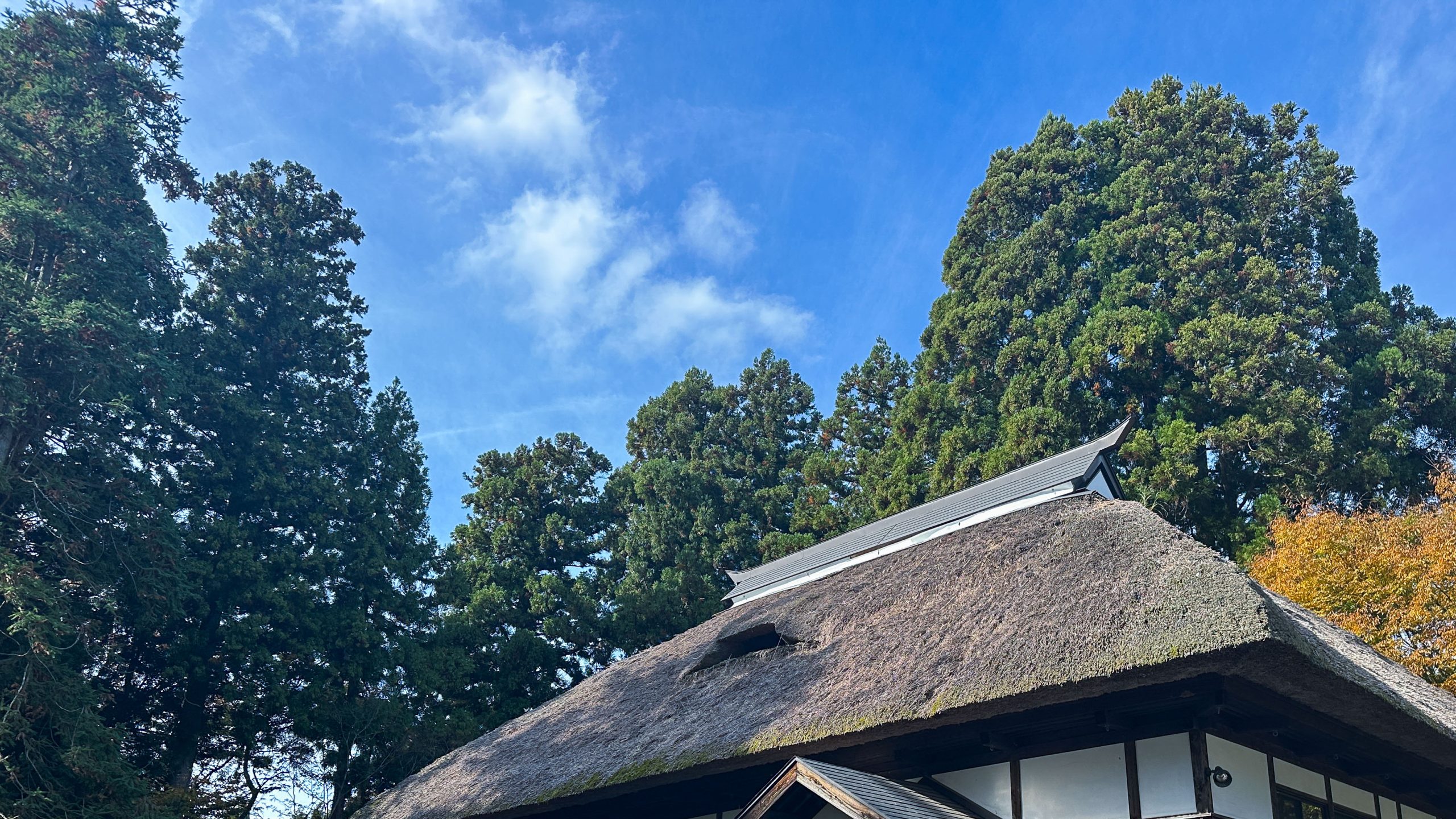
いつからだろうか、古い民家を見るのが好きになっていた。そこには昔の職人の手仕事がそのまま残っており、現代の住宅ではなかなか目にすることのない太い梁や、飾り気のない柱の佇まいがある。だが、そうした建築的な魅力以上に惹かれる理由がある。ほんの100年前、この空間でどんな暮らしが営まれていたのか──その想像をめぐらすことが、とても興味深いからである。
現代の住宅では、図面を見れば「リビング」「ダイニング」といった機能によって明確に区分された部屋が現れる。そこには、その空間で何をするのかという前提があらかじめ組み込まれている。一方、古い民家の間取りはもっと曖昧で、ただ「六畳」「十畳」といった畳数によって示されるだけの空間も多い。用途は固定されておらず、季節や家族構成、日々の生活のリズムによって自在に意味が変化したのだろう。
もちろん、当時の生活習慣や世帯人数は現代とは大きく異なる。文献を通して一般的な暮らしを推測することはできても、その家に住んでいた“個々の生活”を具体的に思い描くことは容易ではない。だからこそ、古民家に残された小さな痕跡から、そこに確かに存在した生活を想像することが興味深い。
また、一般的に古民家と呼ばれるものは、豪農の家であることが多い。古臭くて野暮ったい印象だけで捉えるのは誤りで、実際には何代にもわたり住み継ぐことを前提とした頑健な構造と思想が込められている。100年、200年という長い時間を見据えてつくられた建物だからこそ、家そのものが家族の歴史と分かちがたく結びつき、「家を継ぐ」という行為の重さも現代とはまったく異なっていたのだろう。物質としての家がもつ風格と、家を継ぐ人の人格は一体だったのだと思う。
古民家を歩いていると、そうした歴史の痕跡が随所に現れる。すり減った敷居、煤のついた梁、暑さをしのぐために工夫された間取り、庭へ抜ける風の通り道。長い時間を経て、住む人と職人の知識が積層し、その当時の最適解、あるいは環境に最も適応した形へと洗練されていったのだろう。
一方、現代の住宅は性能や合理性を中心に進化してきた。断熱や気密、耐震といった住宅性能の向上は疑いようがない。しかしその一方で、“人がそこに住んだ痕跡”は薄れつつある。均一な材料、整った寸法、効率化された施工方法──それらは快適性を高めるが、建物に宿る個性や時間の厚みをも削ぎ落としてしまう側面がある。現在の商品住宅に、民家が物質としての存在感は見るべくもない。
古民家を訪れて面白いと感じるのは、けっして不便さや非効率さを美化しているからではない。むしろ、人が生きるために工夫し、手を加え続けてきた蓄積がそこにあるからだ。たとえば、人と人が直接会わなければコミュニケーションが成立しなかった時代、客間は現在とは比べものにならないほど重要な空間だった。違い棚と床の間を据えた堂々と広々とした客間と、こじんまりとした茶の間の親密な空間。そこには当時の人々の文化や風俗が静かに刻まれており、かすかに過去のあった生活を思い起こさせる。
建築に携わっていると、どうしても“現在の常識”の枠の中で家を考えてしまう。しかし古民家に触れると、住宅とは当時の文化、技術、人々の生き方が重なり合ってできた存在であることを思い出させてくれる。家はただ建てられるだけではなく、住む人によって育ち、時間によって磨かれ、意味をまとっていく。
100年前でさえ、これほど生活様式が違っていた。では100年後の暮らしはどうだろう。果たして、いまの私たちの生活様式はそのまま残っているのだろうか。
When did it begin, I wonder—this fondness for looking at old folk houses?
In them, the craftsmanship of past artisans remains intact: the massive beams rarely seen in contemporary homes, the unadorned presence of wooden columns. Yet what draws me in goes beyond such architectural charm. It is the thought of imagining what kind of lives were lived there just a hundred years ago—this act of tracing invisible daily rhythms—that I find deeply compelling.
In modern houses, floor plans clearly designate rooms as “living,” “dining,” and so on, embedding their intended functions from the outset. Older folk houses, however, are far more ambiguous. Spaces are often indicated only by their tatami size—six mats, ten mats—leaving their purpose fluid. Their meaning shifted freely with the seasons, family composition, and everyday rhythms.
Of course, the lifestyle and household structure of that time differed greatly from today’s. While historical documents allow us to infer general patterns of life, imagining the individual lives of specific people who inhabited a particular house is far from easy. This is precisely why the small traces left in old houses make the act of imagination so intriguing.
Moreover, what we commonly call “old folk houses” often belonged to prosperous farming families. To view them merely as rustic or outdated is a mistake. In reality, they were built with robust structures and enduring philosophies, intended to be lived in and passed down through many generations. Because these homes were conceived with a span of 100 or even 200 years in mind, the building itself became inseparable from the family’s history. The weight of “inheriting the house” must have been entirely different from what it is today; the dignity of the physical house and the character of the person inheriting it were, in all likelihood, deeply intertwined.
Walking through such homes, one finds traces of this history everywhere: the worn threshold, the soot-darkened beams, the spatial arrangements devised to temper the heat, the breeze that slips through the garden corridor. Over long stretches of time, the knowledge of residents and craftsmen accumulated, refining the home into what was likely the best—perhaps the most adaptive—solution for its environment.
Contemporary housing, on the other hand, has evolved around performance and efficiency. Insulation, airtightness, seismic resistance—these technical advancements are undeniable. Yet the traces of human presence have grown increasingly faint. Uniform materials, standardized dimensions, and streamlined construction methods enhance comfort, yet simultaneously strip homes of individuality and temporal depth. Compared to old folk houses, today’s mass-produced homes possess little of that physical gravitas.
What fascinates me about old houses is not a romanticization of inconvenience or inefficiency. Rather, it is the accumulation of human ingenuity—the countless adjustments made to suit the environment and sustain daily life. In a time when communication depended almost entirely on face-to-face meetings, the guest room held a significance unimaginable today. The stately, expansive room with its alcove and display shelves stood in contrast to the intimate, modest “tea room” where the family gathered. These architectural differences quietly reflect the culture and customs of the era, faintly evoking the lives once lived there.
As someone involved in architecture, I often find myself confined by the assumptions of our time. But old folk houses remind me that homes are shaped not only by culture, technology, and values, but by the lived experiences of people across generations. A house is not merely built; it is nurtured by its inhabitants, refined by time, and gradually imbued with meaning.
Even a hundred years ago, everyday life was entirely different. So what will life look like a hundred years from now? Will our present way of living remain intact, or will it, too, be transformed beyond recognition?